Probiotic Genomics
WGS/NGS, functional genomics, safety interpretation and strain-level characterization.
Research pillarsPROBIOTIC GENOMICS / MICROBIAL AI / ONE HEALTH
Microbiologist | Probiotic Genomics & Microbial AI Researcher
Senior Scientific Officer, NIGAB-NARC-PARC | Principal Investigator / Project Manager
Integrating whole-genome sequencing, microbiome science, experimental microbiology and artificial intelligence to discover, validate and translate indigenous microbial strains into practical solutions for animal health, food systems and One Health.
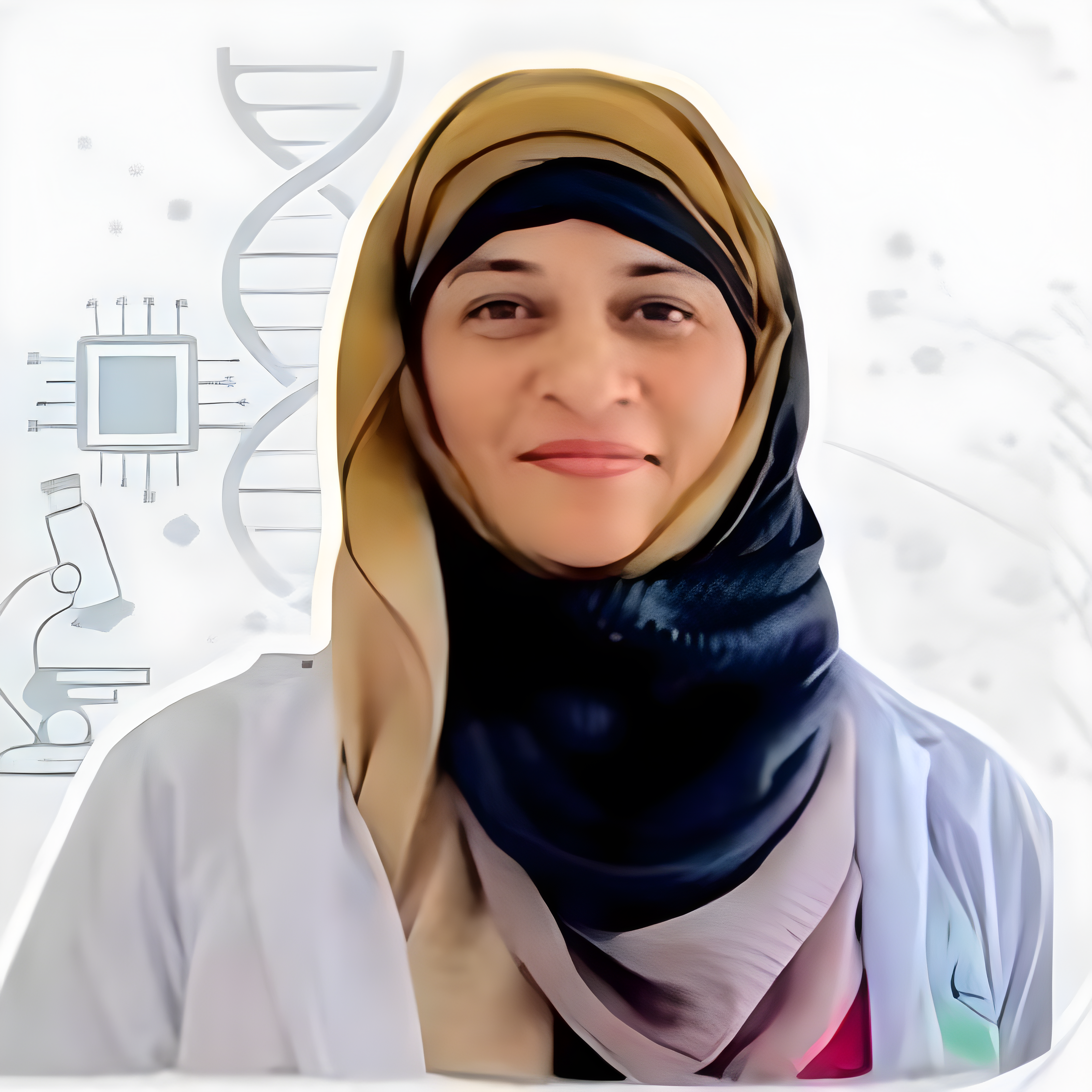
Her research connects microbial isolation and genome-scale evidence with computational interpretation, laboratory validation and practical applications in animal health and food systems.
WGS/NGS, functional genomics, safety interpretation and strain-level characterization.
Research pillarsMachine learning, bioinformatics and feature-based analysis for biological prediction.
AI + AMRProbiotic modulation, animal health, feed efficiency and host-response questions.
Explore themeConnecting microbial genomes, animal health, safer food production and risk assessment.
View directionAS-0236 is an applied research programme combining WGS-identified probiotic strains, feed supplementation, poultry gut-health assessment and machine-learning-supported analysis.
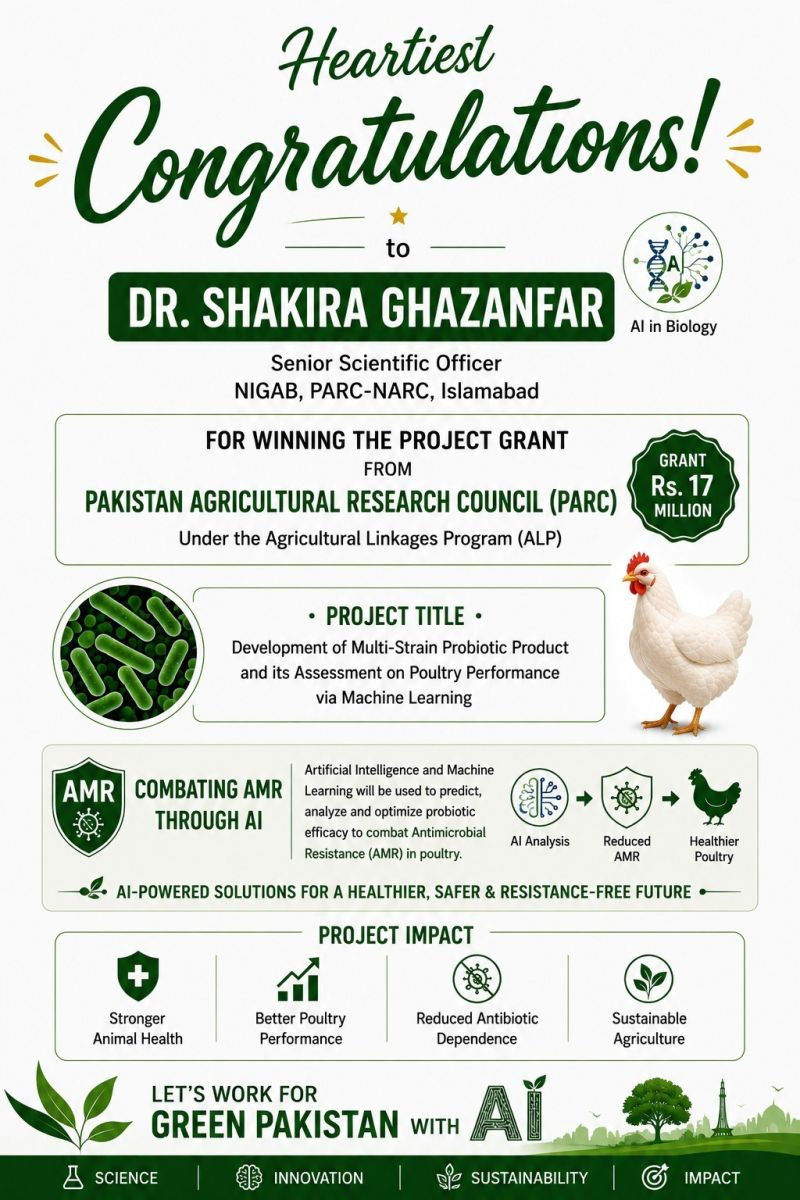
The publication record reflects a continuing programme of work in computational biology, probiotic genomics, microbiome science and animal health, with DOI or publisher links provided where available.
Probiotic peptide docking and molecular-dynamics analysis.
Genome-informed probiotic traits, gut health and metabolic insights.
Microbial AI combines biological experiments with computational analysis to support strain selection, safety screening, functional prediction and product assessment.
Use genomic features to rank strains for safety, function and probiotic potential.
Machine-learning prediction, docking and molecular-dynamics analysis of peptide candidates.
Connect microbial strain data, feed supplementation and poultry performance.
Interpret genomic and microbiome evidence for safer, more sustainable production.
CS-929 connected indigenous yeast identification and molecular/NGS characterization with yeast-extract and beta-glucan product development for food, feed and industry-facing applications.
Public accessions make the genomic evidence traceable and allow researchers to inspect the sequence records underlying the research programme.
ISOLATE → PHENOTYPE → WGS/NGS → SAFETY & FUNCTION → AI RANKING → VALIDATION → PRODUCT
Dr. Ghazanfar's editorial work extends her research in probiotic science into next-generation therapeutics, postbiotics, microbial health and accessible scholarly chapters.
Edited volume • CRC Press / Routledge
Books and chaptersEdited volume • CRC Press / Routledge
Open books pageHEC-approved PhD supervisor, research mentor, book editor, guest editor, international peer reviewer, invited speaker and trainer.
Dr. Ghazanfar's training activities help students, researchers and professionals work confidently with microbial NGS data, artificial intelligence and probiotic-genomics workflows.
Hands-on workshop at NIGAB-NARC on microbial NGS data analysis and artificial intelligence.
Workshop recordPractical instruction in microbial genome analysis, sequence interpretation and biological AI.
National programmeMicrobial NGS and artificial intelligence for better product preparation at NIGAB-NARC, Islamabad.
Open event detailsThrough invited talks, webinars and public training activities, Dr. Ghazanfar shares practical approaches to microbial genomics, artificial intelligence and biological innovation with students, researchers and professional audiences.
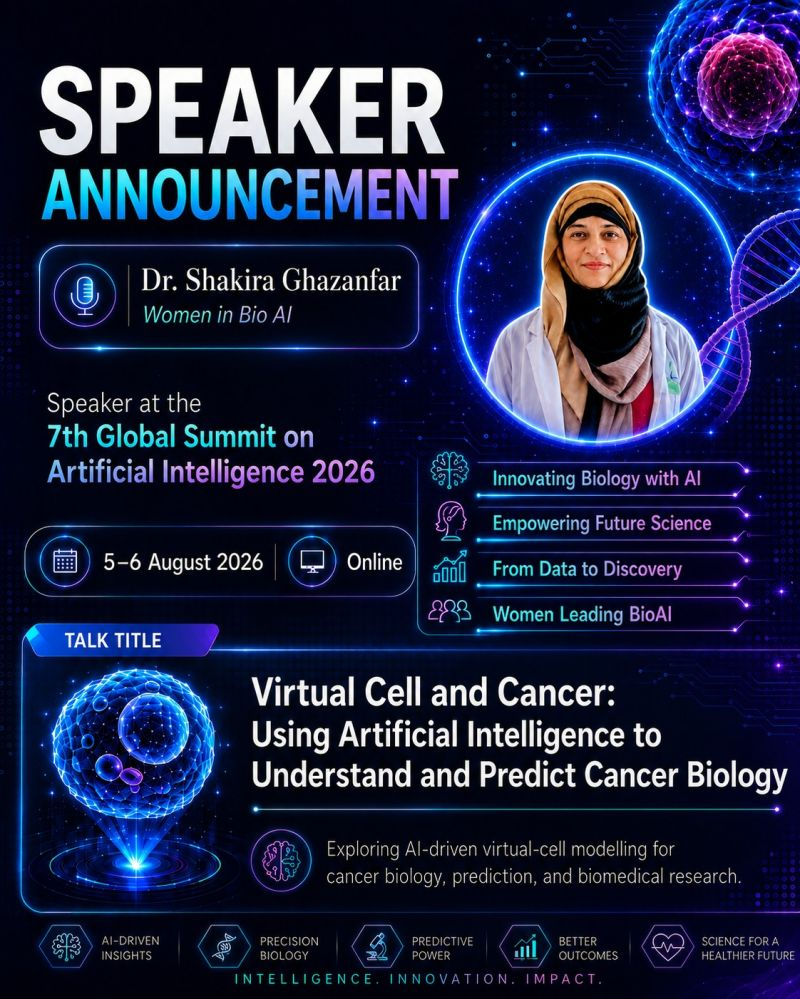
Virtual Cell and Cancer: Using Artificial Intelligence to Understand and Predict Cancer Biology.
View news and speaking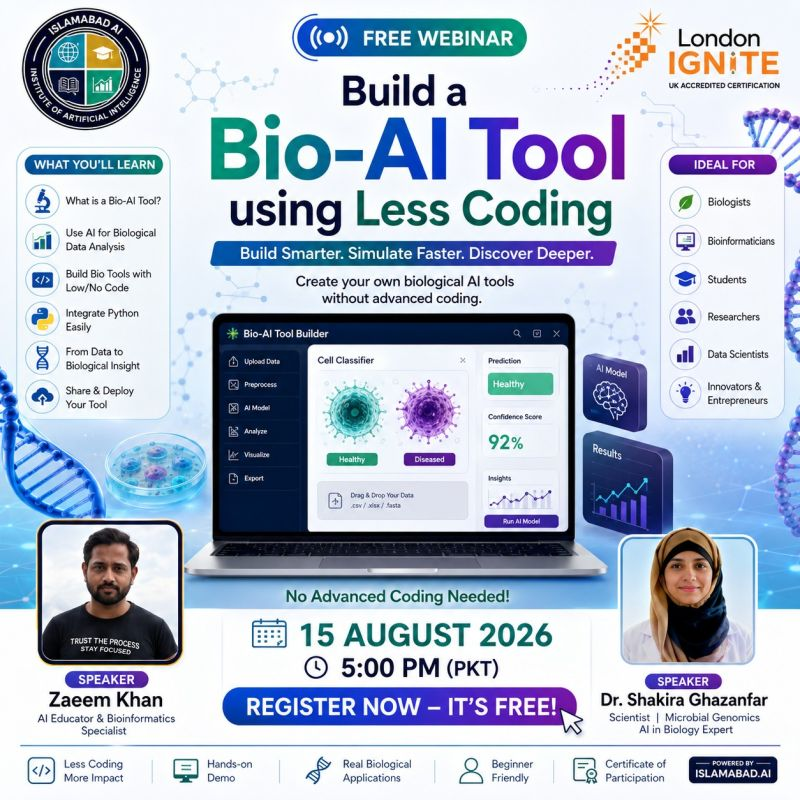
Free webinar for biologists, bioinformaticians, students and researchers.
Open speaking pageDr. Ghazanfar welcomes enquiries about research collaboration, training, invited speaking and scientific exchange.